
The FDF long term trials have been established to undertake 4-year trials of farming systems practices (with a focus on mixed farming) that are hypothesised to improve drought resilience and protect natural capital. To help in understanding the scope and nature of adoption possible, social research has been included in the project to investigate pathways and impediments to adoption of relevant practices and inform extension activities designed to enhance drought resilience.
The key output from this work will be a practice change design framework to support enhanced drought resilience in mixed farming enterprises.
The outcome of this will be an approach to extension design which clearly articulates resilience objectives, and the role extension and adoption plays in achieving these. This will lead to more effective use of extension resources supporting change towards enhanced drought resilience in communities where mixed farming is the dominant land use.
Reveal different views on resilience and adoption to help identify mechanisms blocking adoption and help direct attention to addressing these. Key methods:
‘Living Labs’ is a methodology for different people to work together in real-life settings to test potential practical solutions to shared problems, with a strong focus on what works for end users. The Living Lab approach has become a well-established approach to address complex agricultural and sustainability challenges, particularly those characterised by high levels of social and physical diversity and uncertainty.
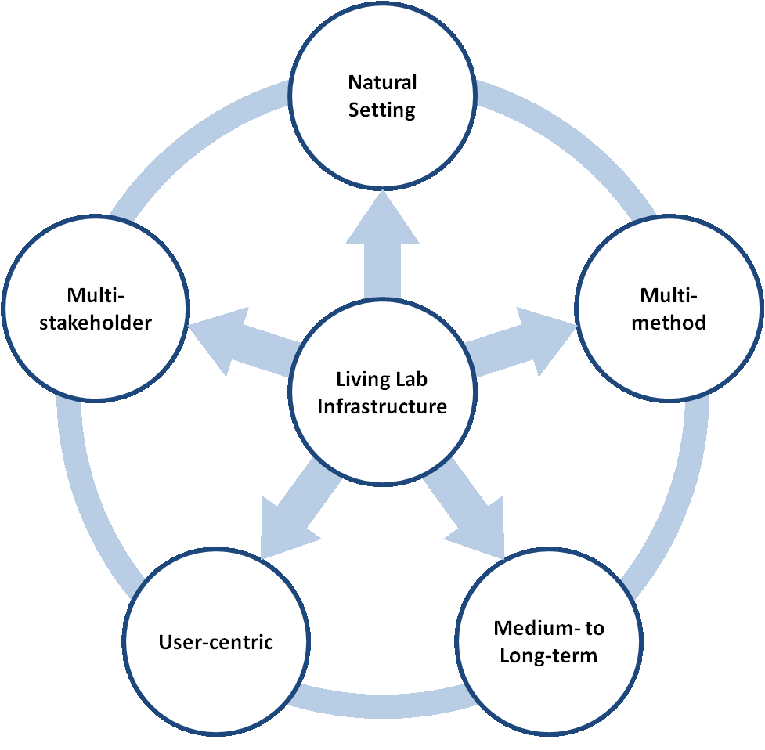 Image source: Schuurman, D. (2013)
Catchphrase: “Fixed programmes, dynamic drought — redesigning extension for adaptive management and farm resilience”.
National drought programmes are often organised around assumed adoption pathways, fixed reporting cycles and narrow "windows" for extension messaging. This can leave extension delivery out of step with fast‑changing on‑farm realities and insufficiently tailored to the stages of the drought cycle farmers are experiencing i.e. stages of a "good period", "uncertainty", "drought" or "recovery".
The LTT Living Lab tackles the tension between national drought programs, central reporting and fixed extension messaging, and farmers’ need for time sensitive, place-based support to adapt farming systems through different stages of drought and for enhancing resilience over time.
The overall aim of the Long‑Term Trials Living Lab is to experiment at the local level with ways to engage farmers and advisers in a range of drought‑resilience strategies as part of an adaptive management approach to drought resilience in mixed farming systems.
Nicole Reichelt (Research Fellow)
Acting social research lead
Contact: reichelt@unimelb.edu.au
Dr Sean Kenny (Research Fellow)
Social research lead
Professor Ruth Nettle (Professorial Fellow)
Social research advisor